

Aquaculture has become one of the fastest-growing food production sectors in the world, supplying a significant share of global seafood consumption. As wild fish stocks decline and demand for protein continues to rise, fish farming has shifted from small-scale traditional practices to highly industrialized and technology-driven systems.
One of the most important factors influencing aquaculture success is fish feed quality and production efficiency. Feed accounts for up to 60–70% of total aquaculture operating costs, meaning that improvements in feed production can directly increase profitability, growth rates, and sustainability.
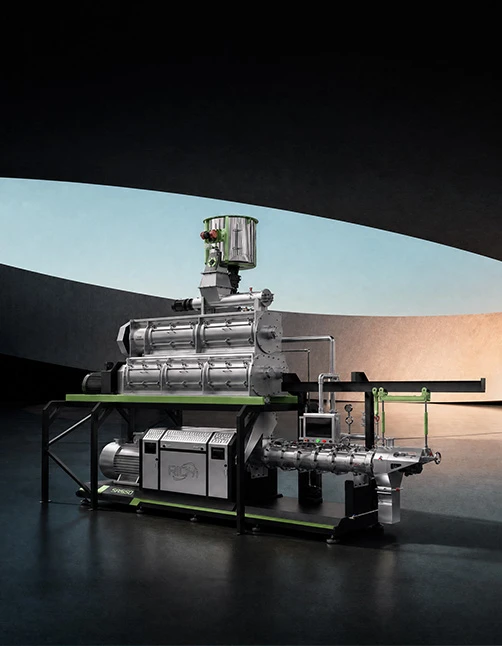
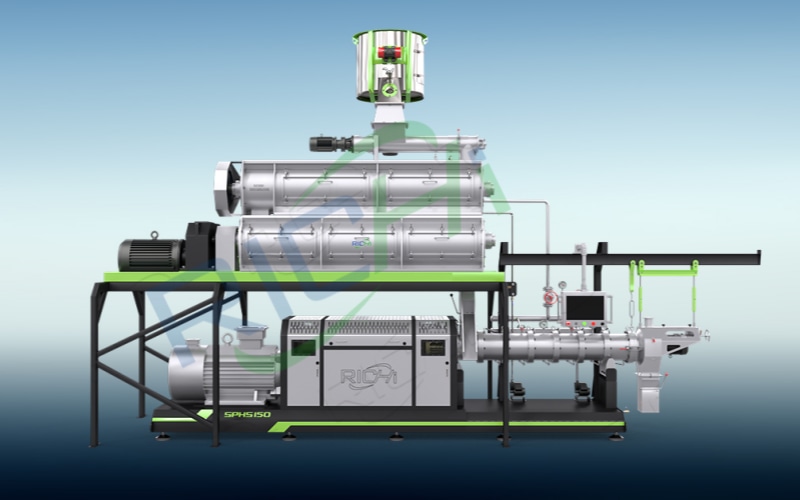
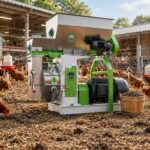
Modern fish feed manufacturing systems—especially those using equipment such as the wet type fish feed extruder—have transformed aquaculture operations by improving feed digestibility, water stability, and production consistency. At the same time, market considerations such as the floating fish feed machine price play a key role in determining investment decisions for fish farmers and feed producers.
This article explores how fish feed production improves aquaculture efficiency, covering production technology, feed quality improvements, cost control, and long-term industry benefits.
https://pelletisingmachine.com/aqua-feed-machine
1. The Role of Fish Feed in Aquaculture Efficiency
Fish feed is the foundation of aquaculture productivity. Its quality directly impacts:
- Growth rate of fish
- Feed conversion ratio (FCR)
- Survival rate
- Water quality
- Production cost
Poor-quality feed leads to slow growth, increased waste, and higher operational costs.
1.1 Feed Conversion Ratio (FCR)
FCR is a key performance indicator in aquaculture.
Lower FCR means:
- Less feed required per kilogram of fish produced
- Lower cost
- Higher efficiency
High-quality fish feed significantly improves FCR.
2. Fish Feed Production Systems and Their Importance
Modern fish feed production involves multiple processing stages:
- Raw material selection
- Grinding and mixing
- Conditioning
- Extrusion or pelleting
- Drying and cooling
- Packaging
Each step contributes to final feed quality.
3. Wet Type Fish Feed Extruder and Its Impact on Efficiency
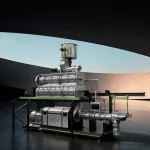
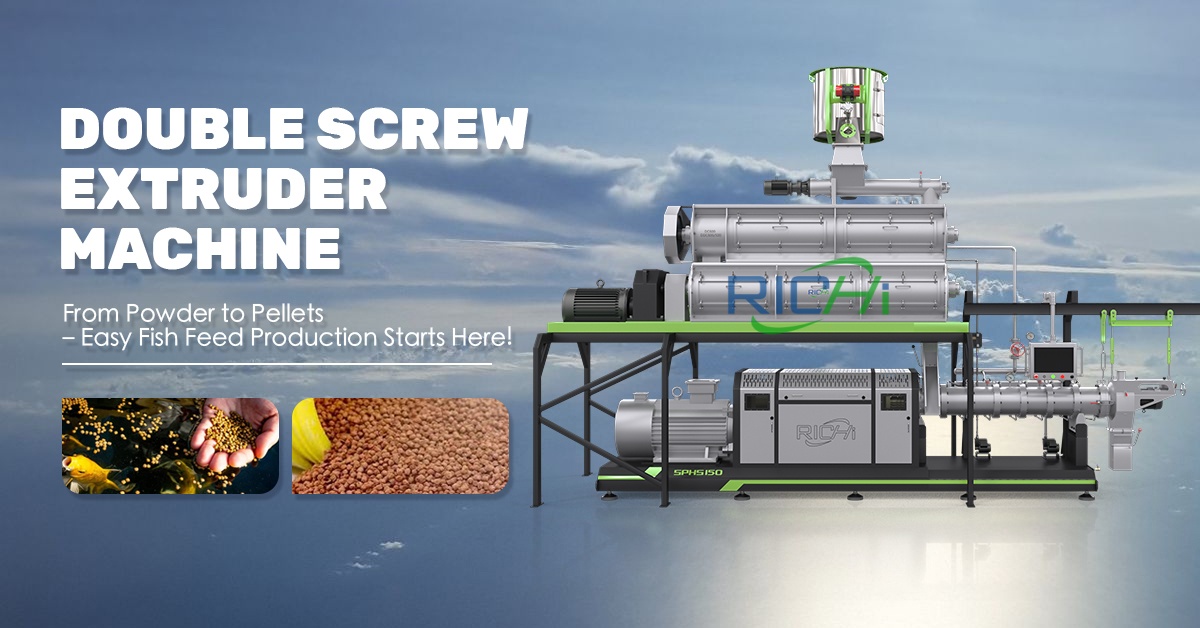
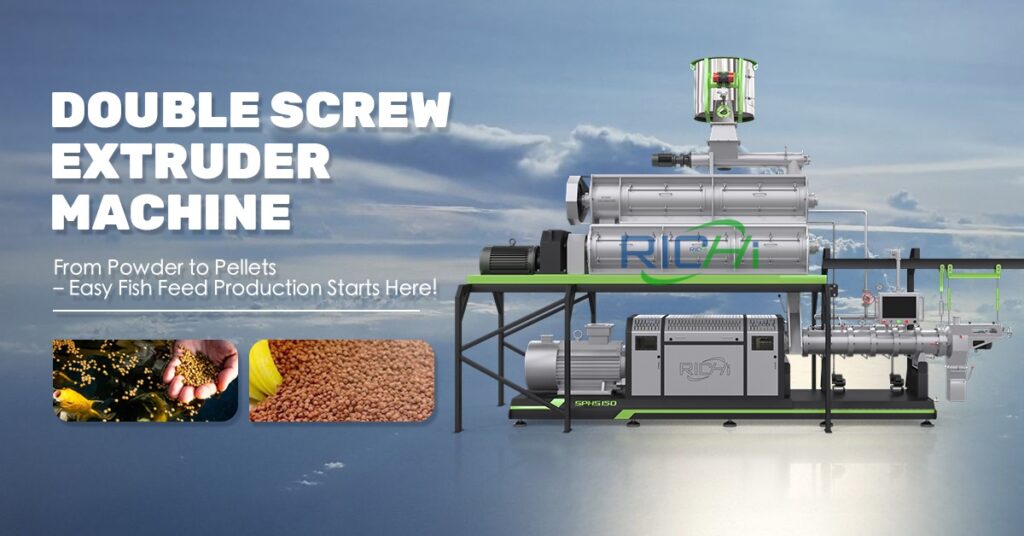
The wet type fish feed extruder is one of the most important machines in modern aquaculture feed production.
3.1 What Is a Wet Type Fish Feed Extruder?
A wet type fish feed extruder is a machine that processes feed ingredients using:
- Steam conditioning
- High pressure
- High temperature
- Mechanical shear
It transforms raw materials into expanded, digestible fish feed pellets.
3.2 How It Works
The process typically includes:
- Mixing raw feed ingredients
- Adding steam and moisture
- Cooking and gelatinizing starch
- Extruding through a die
- Cutting pellets into uniform sizes
3.3 Benefits for Aquaculture Efficiency
(1) Improved Digestibility
Cooking starch improves nutrient absorption, helping fish grow faster.
(2) Floating Ability
Many feeds produced are floating pellets, allowing farmers to monitor feeding behavior.
(3) Reduced Waste
Floating pellets reduce feed loss at the bottom of ponds.
(4) Better Water Quality
Less waste means lower ammonia and pollution levels.
3.4 Impact on Production Scale
The wet type fish feed extruder supports:
- Large-scale feed production
- Consistent product quality
- High efficiency industrial aquaculture systems
4. Floating Fish Feed Machine Price and Investment Considerations
When planning aquaculture feed production, one important factor is the industrial floating fish feed machine price.
4.1 Why Price Matters
The cost of equipment determines:
- Startup investment
- Production capacity
- Return on investment (ROI)
- Scalability of operations
4.2 Factors Affecting Floating Fish Feed Machine Price
(1) Production Capacity
Higher capacity machines cost more but produce more feed.
(2) Automation Level
Fully automated systems increase price but reduce labor costs.
(3) Machine Type
Wet type extruders are generally more advanced and expensive than dry systems.
(4) Material Quality
Stainless steel components increase durability and cost.
4.3 Investment vs Efficiency Trade-Off
Although higher-priced machines require more initial investment, they:
- Reduce long-term operating costs
- Improve feed quality
- Increase production efficiency
This makes them more profitable over time.
5. Raw Material Optimization in Fish Feed Production
Efficient aquaculture depends heavily on feed composition.
5.1 Common Ingredients
- Fish meal
- Soybean meal
- Corn flour
- Wheat flour
- Fish oil
- Vitamin premixes
5.2 Importance of Balanced Nutrition
Proper formulation ensures:
- Fast fish growth
- Strong immunity
- Reduced disease risk
5.3 Role of Extrusion in Nutrient Efficiency
The wet type fish feed extruder improves:
- Protein digestibility
- Fat absorption
- Energy utilization
6. Feed Pellet Quality and Aquaculture Efficiency
High-quality feed pellets improve fish farming performance.
6.1 Key Quality Features
- Uniform size
- Strong water stability
- Appropriate hardness
- Controlled buoyancy
6.2 Benefits of Floating Feed
Floating feed allows farmers to:
- Observe feeding behavior
- Reduce overfeeding
- Improve feeding efficiency
6.3 Waste Reduction
Good-quality pellets reduce:
- Feed sinking losses
- Water pollution
- Operational cost
7. Production Line Integration for Efficiency
Modern aquaculture feed production uses integrated systems.
7.1 Components of a Feed Production Line
- Grinding system
- Mixing system
- Wet type fish feed extruder
- Drying system
- Cooling system
- Packaging system
7.2 Benefits of Integration
- Continuous production
- Reduced labor dependency
- Higher consistency
- Lower error rates
8. Cost Efficiency in Fish Feed Production
Efficiency in production directly reduces cost.(over at this website)
8.1 Main Cost Drivers
- Raw materials
- Energy consumption
- Labor
- Maintenance
8.2 How Technology Reduces Costs
Modern systems improve efficiency by:
- Automating processes
- Reducing waste
- Increasing output per hour
9. Impact on Aquaculture Productivity
Fish feed production technology directly affects farm productivity.
9.1 Faster Fish Growth
High-quality extruded feed improves:
- Digestion
- Nutrient absorption
- Growth speed
9.2 Improved Survival Rate
Better nutrition strengthens:
- Disease resistance
- Stress tolerance
9.3 Higher Yield per Cycle
Efficient feeding leads to:
- More fish production per pond
- Higher profitability
10. Environmental Benefits of Modern Fish Feed Production
Efficient feed production supports sustainability.
10.1 Reduced Water Pollution
Less waste improves:
- Water quality
- Oxygen levels
10.2 Sustainable Resource Use
Efficient feed reduces:
- Overfishing for fish meal
- Resource waste
11. Challenges in Fish Feed Production Efficiency
Despite improvements, challenges remain.
11.1 Energy Consumption
Extrusion requires significant energy input.
11.2 Raw Material Price Fluctuation
Ingredient prices can affect feed cost stability.
11.3 Equipment Maintenance
Machines like the wet type fish feed extruder require:
- Regular maintenance
- Skilled operation
12. Future Trends in Aquaculture Feed Production
The industry continues to evolve rapidly.
12.1 Smart Feed Production Systems
- AI-based formulation
- Automated monitoring
- Real-time quality control
12.2 Sustainable Feed Ingredients
- Plant-based proteins
- Alternative fish meal sources
12.3 More Efficient Machines
Future improvements will reduce:
- Energy consumption
- Production costs
Conclusion
Fish feed production plays a crucial role in improving aquaculture efficiency by enhancing growth rates, reducing feed waste, and optimizing overall production costs. Modern technologies such as the wet type fish feed extruder have revolutionized feed processing by producing highly digestible, stable, and efficient floating pellets that significantly improve fish farming outcomes.
At the same time, investment considerations such as the floating fish feed pellet machine price are important for businesses planning to enter or expand in the aquaculture feed industry. While advanced machines may require higher initial costs, they deliver long-term benefits through improved efficiency, reduced waste, and higher profitability.
As aquaculture continues to expand globally, efficient fish feed production systems will remain a cornerstone of sustainable and profitable fish farming, driving both economic growth and environmental sustainability.