





The combine harvesters have finished their work. The grain is safely stored. And across the field, stretching to the horizon, lies the straw—millions of tons of it, left behind after every wheat, barley, oat, and rice harvest. For generations, this straw has been treated as a nuisance. Some of it gets baled for animal bedding. Some gets chopped and incorporated back into the soil. But a staggering amount is simply burned, releasing smoke and carbon into the atmosphere, or left to rot in the field.
What a waste. Not just of the straw itself, but of the energy and nutrients it contains. The straw represents a significant portion of the plant’s biomass, and it’s packed with stored solar energy. The challenge has always been finding a practical way to use it. It’s bulky, lightweight, and awkward to handle. It doesn’t burn well in conventional furnaces because it tends to blow away before it combusts. And it doesn’t store easily because it takes up so much space.
But there’s a solution that’s been gaining traction: processing straw into dense, uniform pellets. The transformation is remarkable. Loose straw that fills a barn can be compressed into pellets that fit in a few sacks. And those pellets can be burned cleanly as fuel, used as animal bedding, or even incorporated into feed rations. For farmers and entrepreneurs who recognize the opportunity, straw is no longer waste—it’s a resource.
The Straw Resource
Let’s start with the numbers. A wheat crop typically produces about as much straw as it does grain. For every ton of wheat harvested, there’s roughly a ton of straw left behind. Multiply that by the global wheat harvest of over 700 million tons, and the scale becomes clear. Add barley, oats, rice, and other straw-producing crops, and the total is staggering.
The composition of straw varies by crop. Wheat straw is about 40% cellulose, 25% hemicellulose, and 15% lignin, with the remainder being ash and other components. This composition gives straw its structural strength but also makes it resistant to digestion and combustion without processing. The high lignin content provides the natural binding properties that make pelleting possible, and the high silica content in rice straw gives it a unique set of characteristics.
Straw contains energy too. The calorific value of wheat straw is about 14 to 16 megajoules per kilogram, slightly less than wood but still significant. In regions where fossil fuels are expensive, this energy has real value. The challenge is unlocking it in a usable form.
The Challenges of Straw
Why hasn’t straw been used more widely? The answer comes down to its physical properties. Straw is fluffy and lightweight. A ton of loose straw takes up about eight cubic meters of space—roughly the volume of a small room. This makes it expensive to transport, because a truck can only carry a limited volume before reaching its weight capacity.
Straw also has a low bulk density, which makes it difficult to burn efficiently. When you throw loose straw into a furnace, much of it is carried up the chimney by the draft before it has time to burn. The combustion is incomplete, wasting energy and producing smoke.
Storage is another challenge. Straw left outdoors absorbs moisture, which reduces its energy value and promotes decomposition. Stored indoors, it takes up valuable barn space that could be used for other purposes.
These challenges have historically limited the use of straw to low-value applications like bedding and mulch. But pelleting changes the equation entirely by addressing every one of these limitations.
How Pelleting Transforms Straw
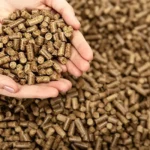
When straw is pelleted, it undergoes a remarkable transformation. The loose, fluffy material is ground to a uniform particle size and fed into a machine that compresses it under high pressure. The friction generates heat, which melts the lignin naturally present in the straw. This lignin acts as a glue, binding the particles into solid, dense pellets.
The density increases dramatically. A ton of pellets takes up less than a cubic meter of space—an eight-fold reduction in volume compared to loose straw. This makes storage and transport far more economical. A truck that could carry only a few tons of loose straw can carry twenty tons of pellets.
The pellets burn efficiently too. Their density prevents them from blowing away in the furnace, and their uniformity allows for consistent combustion. The energy content per unit of volume is far higher than loose straw, making pellets a practical fuel for heating and power generation.
The Equipment That Makes It Happen
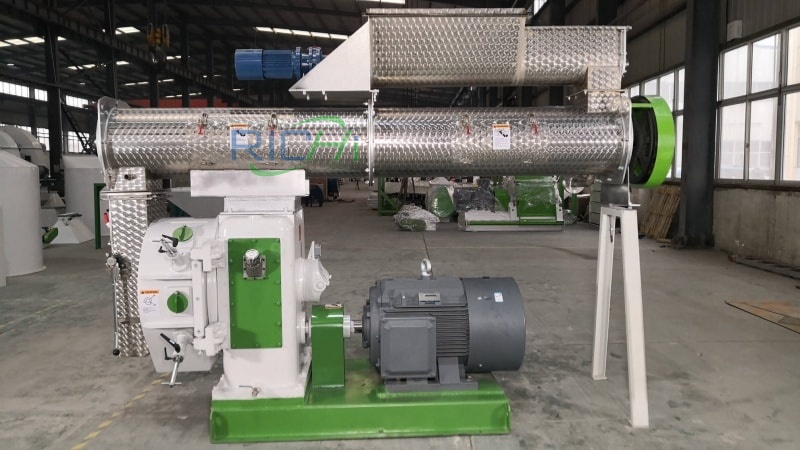
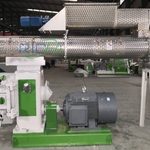
A straw pellet mill is the heart of the operation. These machines are specifically designed to handle the tough, fibrous nature of straw. The die and roller materials must be wear-resistant to handle the abrasive silica content, particularly in rice and oat straw. The feeding mechanism must be capable of handling the variable density and flow characteristics of ground straw.
Unlike pellet mills designed for wood or grains, a straw pellet mill typically requires a higher compression ratio and more robust construction. The material is more resistant to compression, requiring more force to form durable pellets. The conditioning system, which adds steam and moisture before pelleting, is also critical for straw processing.
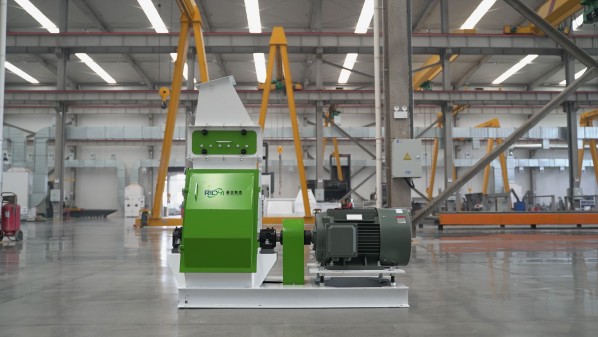
The grinding stage is equally important. Straw must be reduced to a consistent particle size before pelleting. A hammer mill with the correct screen size produces the uniform grind needed for smooth feeding and consistent pellet quality. For straw, the optimal particle size is typically 3 to 5 millimeters.
Why Maintenance Matters
One of the most significant operational considerations in straw pelleting is maintenance. Straw is abrasive, and the wear on dies, rollers, and other components can be substantial. A mill that’s difficult to maintain will spend too much time down for repairs and too little time producing.
An easy maintenance fuel pellet mill addresses this concern directly. The design includes features that reduce the time and labor required for routine maintenance. Quick-change die systems allow operators to replace worn dies in minutes rather than hours. Accessible bearings and grease points make lubrication straightforward. And modular construction means that worn components can be replaced individually rather than requiring expensive complete assemblies.
For operators running a pellet mill continuously, these maintenance features translate directly to higher productivity. Less downtime means more tons produced per shift. Lower maintenance costs mean better margins. And simpler operation means less reliance on specialized technicians.
The Role of the Manufacturer
The quality of the equipment matters enormously in straw pelleting. A poorly built mill will wear quickly, requiring frequent die replacements and producing inconsistent pellets. A well-built mill, by contrast, will run for thousands of hours with minimal maintenance.
Richi Pellet Mill has developed a reputation in the straw pelleting sector for robust construction and thoughtful design. Their machines incorporate wear-resistant alloys in the dies and rollers, heavy-duty bearings that handle the loads of compression, and efficient cooling systems that prevent overheating during continuous operation.
Beyond the hardware, the manufacturer’s support is equally important. Straw pelleting requires specific knowledge about conditioning, die selection, and maintenance procedures. A manufacturer who understands these requirements can help operators achieve optimal performance from their equipment.
Diverse Applications
Straw pellets have multiple uses, and the market for each application has grown significantly in recent years.
Fuel is the largest market. Straw pellets are used in industrial boilers, district heating systems, and residential stoves. They provide a renewable alternative to fossil fuels, with lower emissions than coal and comparable convenience to wood pellets. In many regions, government policies support the use of agricultural biomass for energy, creating stable demand.
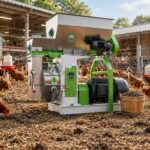
Animal bedding is another important market. Straw pellets absorb moisture well and provide a comfortable surface for livestock. They’re easier to handle and store than loose straw, and they produce less dust. Poultry farmers and horse owners are among the largest users of pelleted straw bedding.
Feed applications are more limited but growing. Processed straw can be included in ruminant rations as a source of fiber, particularly in total mixed rations for dairy cattle. The pelleting process improves digestibility somewhat, making the straw more valuable as feed.
The Economics
The economics of straw pelleting depend on several factors, but the fundamentals are favorable. The raw material—straw—is often available at very low cost or even negative cost if it would otherwise need to be disposed of. The energy cost of processing is significant, as pelleting requires substantial power. But the value of the finished pellets, whether sold as fuel or bedding, typically exceeds the processing cost.
A small operation processing a few hundred tons annually can be profitable with modest equipment investment. A larger operation with capacities of several thousand tons per year achieves economies of scale that improve margins substantially. The investment payback period for a commercial straw pellet plant is typically one to three years, depending on local energy prices and market conditions.
Related post:https://pelletizerextruder.com/straw-pellet-machine/
Conclusion
Straw has been overlooked for too long. The residue left behind after the grain harvest contains energy and material value that can be captured with the right processing approach. Pelleting transforms this bulky, problematic material into a dense, uniform product that’s easy to handle, transport, and use.
The equipment to do this is available, the markets are growing, and the economic case is increasingly compelling. For farmers and entrepreneurs looking to add value to agricultural residues, straw pelleting represents a genuine opportunity. The straw may be gone from the field, but with the right approach, its value is just beginning to be realized.