

When planning a fish feed production project, one of the first questions people often ask is how much the extrusion equipment will cost. It sounds like a straightforward question, but there is no single figure that applies to every project.
Fish feed extruders are available in different capacities and configurations. Some are designed for small farms producing a limited amount of feed, while others are integrated into large commercial aquafeed plants operating continuously. The type of raw material, desired pellet size, moisture level, extrusion method, energy source, and degree of automation can all affect the overall investment.
Understanding these factors is more useful than simply comparing machine prices.
This article looks at the main considerations behind extrusion equipment costs and explains how raw materials, production capacity, drying, cooling, and plant design influence the final project budget.
Why Is Fish Feed Extrusion Different From Pelletizing?
Fish feed can be produced through several processing methods, but extrusion has become an important technology for floating and slow-sinking feeds.
During extrusion, a mixture of feed ingredients is subjected to mechanical shear, pressure, heat, and moisture. As the material moves through the extruder, its physical structure changes.
When the compressed material leaves the die, pressure drops rapidly. Depending on the formulation and processing conditions, the expansion can create floating or water-stable feed particles.
This makes extrusion particularly useful for species whose feeding behavior benefits from floating or slowly sinking pellets.
The additional processing capability also means that extrusion equipment can be more complex than a basic feed pellet mill.
What Does an Extruder Actually Do?
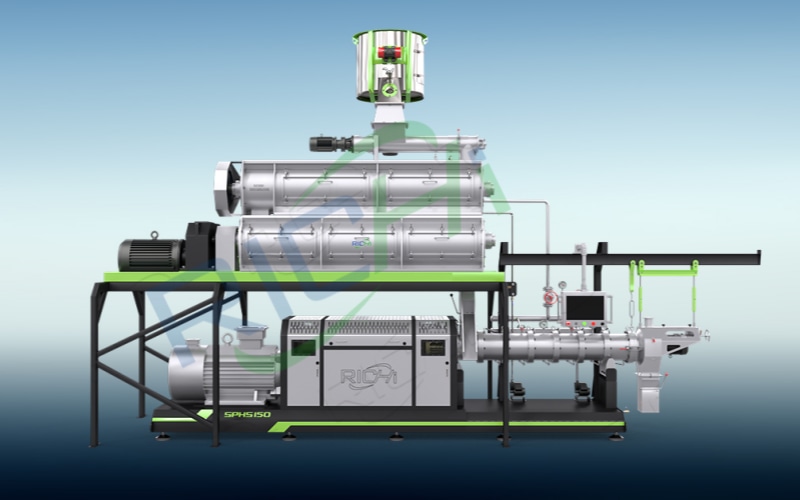
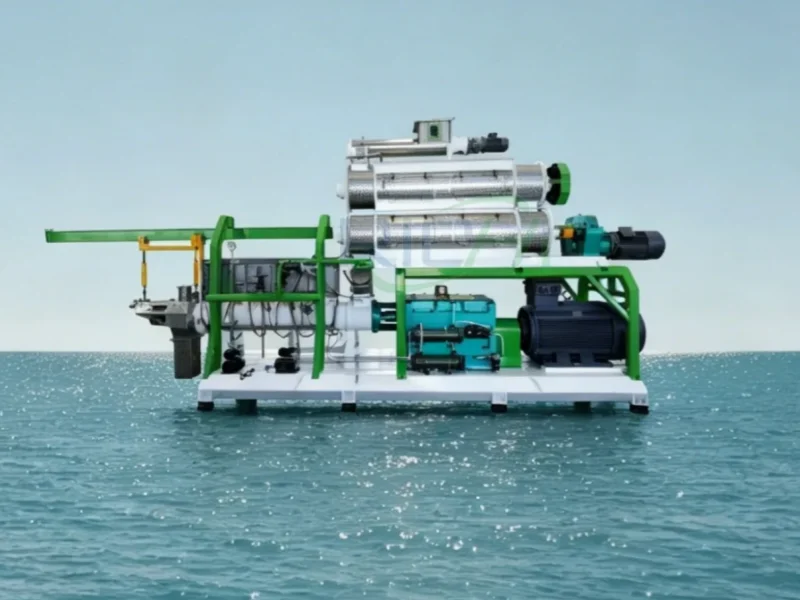
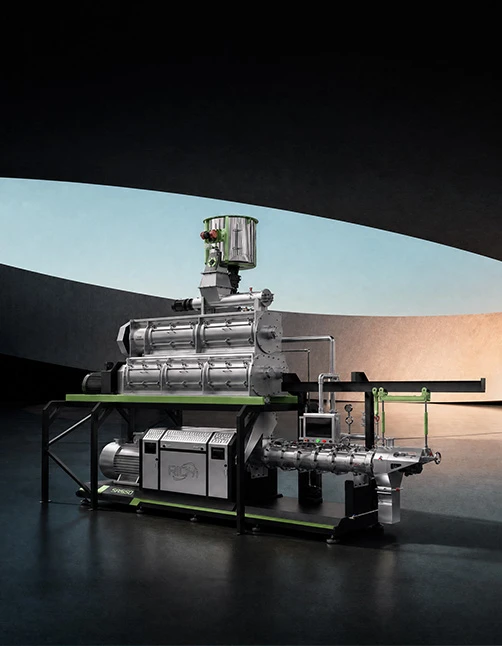
An extruder performs several functions within a relatively short processing section.
First, the raw material is fed into the machine. The screw system then transports and compresses the mixture.
Mechanical friction and external heating can raise the material temperature. Water or steam may also be introduced depending on the extruder design and process requirements.
Inside the barrel, the ingredients undergo significant physical transformation.
At the die, the material is shaped into continuous strands before being cut into pellets of the desired length.
The exact operating conditions depend on the feed formula and the characteristics of the target species.
What Determines Fish Feed Extruder Machine Price?
The fish feed extruder machine price is influenced by several technical factors rather than by machine size alone.
Capacity is one of the most obvious variables. A machine designed to produce a few hundred kilograms per hour will generally have a different configuration from equipment intended for several tons per hour.
The extrusion method also matters. Dry-type and wet-type extruders have different process requirements and auxiliary equipment.
Motor power, screw configuration, barrel design, die system, feeding system, preconditioning requirements, and control systems can all affect the equipment specification.
The price of a complete extrusion system should therefore be evaluated together with the required supporting equipment rather than considering the extruder as an isolated machine.
What Is the Difference Between Dry and Wet Extrusion?
Dry and wet extrusion are two common approaches to feed extrusion.
A dry extruder generally has a relatively compact configuration and does not necessarily require a separate steam-conditioning system.
Wet extrusion introduces additional moisture and heat, often through a preconditioner or other conditioning equipment.
Wet extrusion can provide greater control over the cooking process and may be suitable for larger commercial feed plants.
Dry extrusion may be attractive for smaller operations because the system can be simpler.
Neither method is universally suitable for every project. The appropriate choice depends on the raw materials, feed type, production scale, and desired product characteristics.
Why Does Production Capacity Matter?
Production capacity is closely connected with equipment size, motor power, and the number of auxiliary machines required.
For example, a small farm producing feed for its own fish ponds may only require a relatively modest extrusion system.
A commercial aquafeed producer supplying multiple farms may require continuous operation and considerably higher throughput.
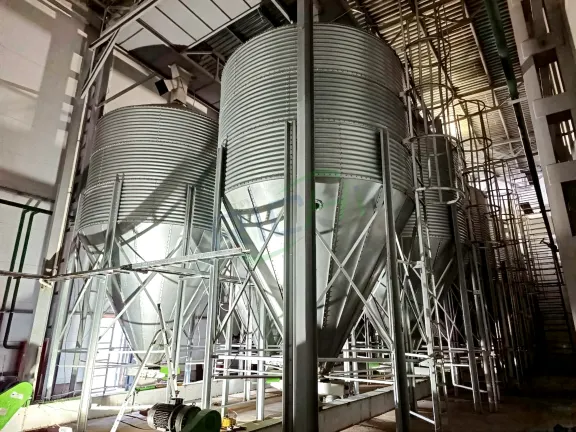
Higher capacity does not simply mean purchasing a larger extruder. The feeding, crushing, mixing, drying, cooling, conveying, and packaging systems also need to handle the same production volume.
If one section is significantly smaller than the others, it can become a bottleneck.
A balanced process line is therefore more important than maximizing the nominal capacity of one machine.
How Do Raw Materials Affect Extrusion?
The formulation has a major influence on extrusion performance.
Fish feed may contain fish meal, soybean meal, grains, starch sources, oils, protein concentrates, vitamins, minerals, and other ingredients.
Starch is particularly important for many extrusion processes because it contributes to expansion and pellet structure.
Protein and fat levels also affect the behavior of the mixture.
A formula containing very little starch may not expand in the same way as a starch-rich formula. High-fat formulations may also behave differently because excessive oil can affect expansion and mechanical processing.
For this reason, extrusion conditions should be developed together with the feed formulation.
Does Fish Feed Particle Size Matter Before Extrusion?
Yes.
Raw materials usually need to be ground before entering the extruder.
Large particles can make feeding and cooking less uniform, particularly when producing small-diameter fish feed.
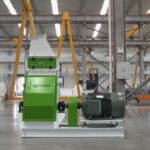
A hammer mill or other grinding system can reduce particle size and improve the consistency of the feed mixture.
The appropriate particle size depends on the target pellet diameter and the species being fed.
Very fine grinding, however, consumes additional energy. The goal should therefore be an appropriate and consistent particle size rather than simply grinding everything as finely as possible.
How Does Pellet Size Affect the Process?
Different fish species require different feed particle sizes.
Fry and juvenile fish generally need smaller particles than larger fish. The desired pellet size can also vary according to feeding behavior and culture conditions.
Producing very small pellets requires suitable dies and accurate cutting.
As pellet diameter decreases, the die configuration, cutting system, feed preparation, and operating conditions may become more demanding.
A production line intended to manufacture several pellet sizes should therefore be designed with flexibility in mind.
Interchangeable dies and adjustable cutting systems can make product changes easier.
Why Is Buoyancy Important in Floating Fish Feed?
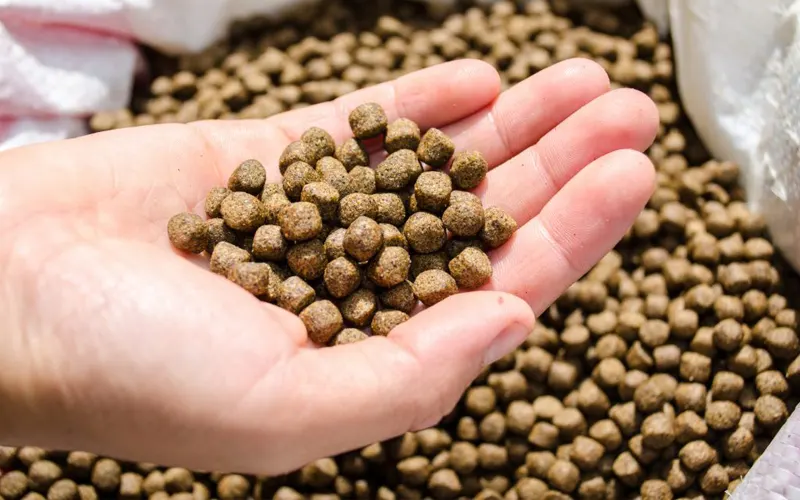
Floating feed is useful because farmers can observe feeding activity on the water surface.
This allows operators to estimate how actively fish are consuming the feed and may help reduce unnecessary feeding.
The floating behavior of extruded pellets depends on several factors, including expansion ratio, density, moisture, formulation, and extrusion conditions.
The objective is not simply to make every pellet float as much as possible.
Some species or feeding systems may benefit from slow-sinking or sinking feed.
Therefore, the extrusion process should be matched to the biological requirements of the target fish rather than treating floating ability as the only quality indicator.
What Role Does Steam Play?
Steam can provide both heat and moisture during feed conditioning.
In wet extrusion systems, steam may help soften the raw material before it enters the main extrusion section.
Proper conditioning can improve cooking efficiency and reduce mechanical stress.
However, steam quality and control are important. Excessive moisture can affect pellet expansion and increase the drying load later in the process.
Insufficient conditioning can result in poor cooking and unstable pellet formation.
A well-designed system therefore needs controlled steam addition rather than simply adding as much steam as possible.
Is a Preconditioner Necessary?
A preconditioner is commonly used in larger extrusion systems to mix the feed ingredients with steam or water before they enter the extruder.
It can improve moisture distribution and begin the cooking process.
For some small-scale applications, a separate preconditioner may not be necessary.
For high-capacity commercial systems, however, preconditioning can provide better process control.
Whether it is required depends on the extrusion method, formulation, capacity, and equipment configuration.
This is another reason why comparing extruder prices without considering the complete process can produce misleading conclusions.
How Does Oil Addition Affect Fish Feed?
Oil is an important component of many aquafeed formulas, but adding too much oil before extrusion can affect processing.
High oil levels may reduce expansion and alter the physical structure of the pellets.
In some production systems, part of the oil is added after extrusion through a vacuum coating system.
This allows manufacturers to increase the final energy density of the feed while maintaining suitable extrusion conditions.
The decision depends on the formulation, species, pellet characteristics, and production technology.
Can One Extruder Produce Different Types of Feed?
Many extrusion systems can produce different feed products by changing dies, cutting conditions, formulations, and operating parameters.
However, flexibility has limits.
A machine optimized for one pellet size may require adjustment before producing a significantly different product.
Frequent product changes can also increase cleaning time and material losses.
For commercial plants producing many types of feed, process planning becomes important.
A practical production schedule can group similar formulations together to reduce unnecessary changes.
Can Extrusion Equipment Produce Pet Food Too?
The basic extrusion principle is not limited to aquaculture.
Extrusion is also widely used for producing certain pet foods because it can cook, shape, and texturize mixtures of grains, proteins, fats, and other ingredients.
A pet dog food extruder machine for making kibble may share some basic mechanical principles with an aquafeed extruder, but the formulation, die system, pellet shape, moisture conditions, and downstream processing requirements can be different.
This illustrates an important point: similar-looking extrusion equipment does not necessarily mean identical processing requirements.
Equipment should always be selected according to the actual product being manufactured.
How Much Energy Does Extrusion Consume?
Energy consumption depends on several factors.
Motor power is only one part of the calculation.
Raw-material moisture, formulation, production capacity, extrusion pressure, drying requirements, steam consumption, and operating hours all affect total energy use.
For example, a formulation that requires extensive drying can increase energy consumption even if the extruder itself operates efficiently.
This is why energy should be evaluated across the complete process line rather than only by looking at the extruder motor.
Should a Small Farm Build a Complete Production Line?
Not necessarily.
A small fish farm may not need a fully automated commercial plant.
If feed demand is limited, a compact extrusion system combined with basic grinding and mixing equipment may be enough.
A complete drying, cooling, screening, and automatic packaging system becomes more relevant when production volume increases.
The economic logic is simple: equipment should match actual feed demand.
Buying excessive capacity can lead to low utilization, while equipment that is too small can limit future production.
How Should a Fish Feed Production Line Be Planned?
The first step is to define the target feed.
Important parameters include:
- Fish species
- Fish growth stage
- Pellet diameter
- Floating or sinking behavior
- Daily feed demand
- Raw-material formulation
- Desired production capacity
- Final moisture
- Packaging requirements
Once these parameters are known, the process can be developed.
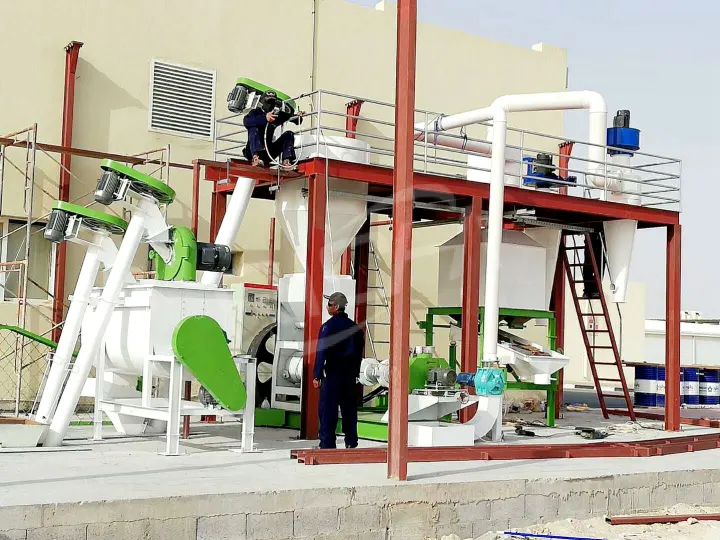
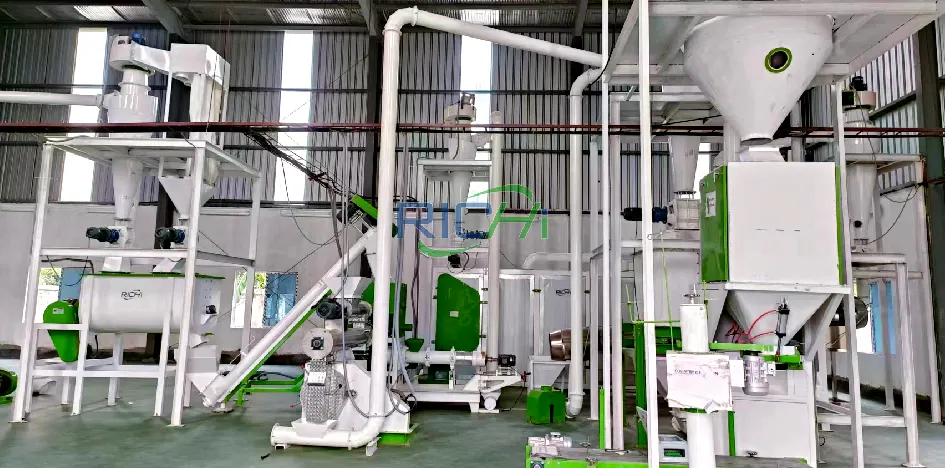
A typical line may include raw-material grinding, batching, mixing, extrusion, drying, cooling, screening, coating, and packaging.
Not every project requires every stage.
What Should Be Considered When Comparing Equipment Suppliers?
A supplier should be evaluated based on more than the quoted machine price.
Technical support, equipment configuration, process experience, spare-parts availability, installation guidance, and after-sales service can all influence the long-term operation of a feed plant.
Companies such as RICHI Manufacture work in areas related to feed machinery and pellet-processing equipment.
When comparing suppliers, it is useful to provide the same project information to each company. This makes technical quotations easier to compare.
For example, asking several suppliers for prices without specifying capacity, raw materials, pellet size, or desired product type can result in quotations for completely different equipment.
What Information Should Be Provided for a Quotation?
A useful equipment inquiry should include as much technical information as possible.
At minimum, the following details are helpful:
- Raw-material types
- Approximate formulation
- Moisture content
- Desired capacity
- Pellet size
- Floating or sinking requirement
- Working hours per day
- Available electricity
- Available land
- Packaging method
A clear technical description makes it easier to determine which machines are actually required.
It also reduces the risk of comparing a standalone extruder with a complete production line and assuming that the two quotations represent the same scope.
Is the Cheapest Equipment Always the Most Economical?
Initial price and long-term cost are not the same thing.
A lower-cost machine may have a simpler configuration, lower automation, or different component specifications.
Another machine may have a higher purchase price but lower energy consumption, easier maintenance, or greater production stability.
Operating costs should therefore be considered alongside the initial investment.
These may include electricity, steam, labor, spare parts, maintenance, drying energy, and raw-material losses.
A simple calculation of cost per ton can provide a more useful comparison than looking only at the purchase price.
What About Maintenance?
Extrusion equipment operates under significant mechanical stress.
Screws, dies, knives, bearings, and other wear components need regular inspection.
The actual service life of these components depends on raw-material characteristics, operating conditions, production hours, and maintenance practices.
Foreign objects in the feed mixture can cause particularly serious problems.
Good raw-material cleaning and appropriate grinding can therefore contribute to equipment reliability.
Regular maintenance also makes it easier to identify small problems before they become major failures.
How Long Does It Take to Build an Extrusion Project?
Project schedules vary according to plant size and complexity.
A small standalone extrusion system can generally be installed more quickly than a complete commercial aquafeed plant.
Larger projects may involve civil construction, equipment manufacturing, transportation, installation, electrical work, steam systems, drying equipment, commissioning, and operator training.
The construction schedule should therefore be divided into several stages.
Site preparation can often begin while equipment is being manufactured, helping reduce the total project duration.
What Should Be Considered Before Installation?
The site should have adequate space for raw-material storage, processing equipment, finished-feed storage, and vehicle movement.
Electrical capacity should be checked carefully because extrusion, grinding, drying, conveying, and packaging equipment can require substantial power.
If steam is used, the boiler and steam-distribution system also need to be planned.
Ventilation is important around drying and feed-handling areas.
Maintenance access should be included in the layout rather than added after the machines are installed.
A practical plant layout should make it possible for materials to move efficiently from raw ingredients to finished feed.
What Is the Best Way to Estimate Equipment Cost?
The most reliable approach is to estimate the complete process rather than a single machine.
Start with the target capacity and product specifications.
Then determine which raw-material preparation equipment is necessary.
After that, evaluate extrusion, drying, cooling, screening, coating, conveying, and packaging.
Finally, consider installation, electrical systems, steam systems, buildings, storage, and other infrastructure.
This produces a more realistic picture of the total project investment.
A standalone extruder quotation may look attractive at first, but the final production system may require several additional components.
Can Equipment Be Upgraded Later?
Some projects can be expanded gradually.
For example, a small producer may begin with a basic extrusion and drying system and later add automatic conveying, packaging, or additional processing capacity.
However, future expansion should be considered during the initial layout design.
If the building has no space for additional equipment, expansion can become expensive.
Electrical systems, foundations, material flow, and storage capacity can also be designed with future growth in mind.
Planning for expansion does not mean buying unnecessary equipment from the beginning. It means avoiding a layout that prevents reasonable future development.
Final Thoughts: What Really Determines Extrusion Equipment Cost?
The cost of fish feed extrusion is influenced by much more than the extruder itself.
Capacity, extrusion technology, raw-material formulation, pellet size, moisture content, drying requirements, automation, auxiliary equipment, and plant infrastructure all contribute to the total investment.
A small farm producing limited quantities of floating feed may need a relatively simple setup. A commercial aquafeed producer supplying multiple markets may require a much more comprehensive automated line.
The most useful approach is to begin with the product and work backward toward the equipment.
Define the fish species, feed formulation, pellet size, production capacity, floating or sinking characteristics, and storage requirements first. Then determine the appropriate grinding, mixing, extrusion, drying, cooling, screening, coating, and packaging equipment.
This method makes equipment comparisons more meaningful and helps prevent the common mistake of choosing machinery based solely on its advertised capacity or initial price.
Extrusion is ultimately a process technology rather than simply a piece of machinery. When raw materials, formulation, moisture, temperature, pressure, and downstream drying are properly coordinated, the production line can create consistent feed that is easier to handle and better suited to the needs of the target fish.
Understanding these relationships is the most practical starting point for anyone planning an aquafeed extrusion project.