


Every poultry farmer knows the routine. You fill the feeders, the birds eat, and you hope the feed does its job. But how often do you stop to think about what that feed is actually doing? Or more importantly, what it could be doing if it were made differently? The truth is that feed is not just fuel. It is a precision tool. And like any tool, its effectiveness depends on how it is made.
Most commercial feed is produced in large batches with ingredients that change based on price and availability. The pellet quality varies. The particle size shifts. The fines content creeps up. The birds notice. They eat less. They waste more. They grow unevenly. And the feed conversion ratio, that number you watch so closely, starts to drift in the wrong direction. You might not see it immediately, but over a flock cycle, the losses add up. What if you could take control of that? What if you could make your own feed, on your own terms, with equipment that is built for the job?
Why Feed Form Matters More Than You Think
Poultry are not grazers. They are peckers. They eat quickly, and they are selective. When you offer mash, they sort through it, picking out the bits they like and leaving the rest. That means they are not getting a balanced ration. They are getting a partial ration, and the rest is wasted. Pellets solve that problem. When ingredients are ground, mixed, and compressed into a uniform pellet, every bite contains the same nutrition. There is no sorting. There is no waste. The birds get exactly what you intended.
But not all pellets are equal. A pellet that is too hard can be difficult for young birds to eat. A pellet that is too soft crumbles into dust before it reaches the feeder. A pellet with too many fines creates dust, wastes feed, and irritates the birds’ respiratory systems. The difference between a good pellet and a bad one often comes down to the equipment that made it. That is why more and more producers are looking at on-site feed production as a way to control quality and cut costs. A chicken feed making machine is no longer just for large commercial mills. It is becoming a practical option for farms of all sizes.
What Goes Into a Feed Production Line
A complete feed production line is not a single machine. It is a series of machines that work together. The first step is grinding. A hammer mill reduces grains and other ingredients to a consistent particle size. The grind affects how well the ingredients mix, how they condition, and how they pellet. If the grind is too coarse, the pellets will be weak. If it is too fine, the pellets may be too dense and less palatable.
Next comes mixing. A mixer blends the ground ingredients with protein meals, minerals, vitamins, and any additives. The goal is uniformity. Every batch must be identical. If the mixer is not thorough, some birds get too much of one nutrient and not enough of another. The result is uneven growth and poor performance.
Then comes conditioning. Steam is injected into the mixed material to soften the particles and activate natural binders. The temperature and moisture must be controlled precisely. Too little conditioning produces crumbly pellets. Too much makes the material sticky and difficult to press.
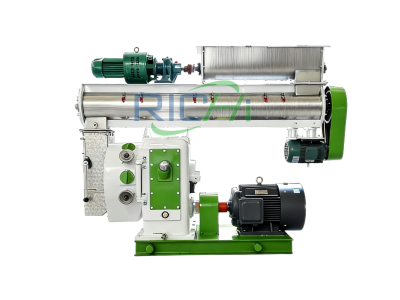
The heart of the line is the pellet mill. This is where the material is forced through a die under high pressure. The friction generates heat, which melts the natural lignin and binds the particles into a solid pellet. The die determines the pellet size and density. The rollers press the material through the die. The motor provides the power. The control system keeps everything running smoothly.
After pelleting, the hot pellets go to a cooler. Cooling hardens the pellets and reduces moisture to a safe level for storage. Then a screener removes fines, which are recycled back into the process. The finished pellets are uniform, durable, and ready to feed.
The Role of the poultry feed pellet making machine
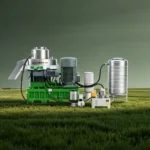
The pellet mill is the centerpiece of the line, and a poultry feed pellet making machine is designed specifically for the demands of poultry feed. It is not a generic pellet mill. It has a die configuration that produces the right pellet size for different ages and types of birds. It has a conditioning system that handles the steam requirements of poultry rations. It has a drive system that can run continuously without overheating.
The best machines are built with wear-resistant dies and rollers. Poultry feed can be abrasive, especially when it contains mineral supplements or fibrous by-products. A die made from standard steel will wear out quickly, leading to inconsistent pellet quality and frequent replacements. A die made from hardened alloy lasts longer, produces better pellets, and costs less per ton over its lifetime.
The machine also needs to be easy to maintain. Dies and rollers are wear items. They will need to be replaced. A machine that allows quick die changes and easy access to the rollers will spend less time down and more time producing. That is why experienced producers look for equipment that is designed for serviceability, not just for the initial sale.
Automation and Consistency
Modern feed production is increasingly automated. Sensors monitor temperature, pressure, moisture, and feed rate. The control system adjusts parameters in real time to keep the process stable. This reduces the need for constant operator attention and minimizes the risk of human error. The result is more consistent pellets, batch after batch.
Automation also improves safety. The system can detect abnormal conditions, such as a sudden drop in feed or a rise in temperature, and shut down before damage occurs. It can log data for traceability. It can alert operators to maintenance needs before a breakdown happens. For large operations, these features are not luxuries. They are essential.
Choosing the Right pelleting machine
When you start shopping for a pelleting machine, you will find a wide range of options. Some are small and affordable. Some are large and industrial. Some are manual. Some are fully automated. The right choice depends on your production goals, your available space, your power supply, and your budget.
The first question is capacity. How much feed do you need to produce per hour? A small farm might need a few hundred kilograms. A commercial operation might need several tons. Match the machine to your actual needs. Oversizing wastes money. Undersizing means you are always playing catch-up.
The second question is die configuration. What pellet size do you need? Broilers, layers, and breeders have different requirements. Young birds need smaller pellets or crumbles. Older birds can handle larger pellets. The die must match the target bird.
The third question is automation. How much operator attention do you want to give? A manual machine requires more oversight. An automated machine requires less. The trade-off is upfront cost versus ongoing labor cost. For many operations, the labor savings from automation justify the higher initial investment.
The fourth question is support. Who will help you when something goes wrong? Dies wear out. Bearings fail. Belts break. You need a supplier who can provide spare parts and technical assistance quickly. A machine that sits idle waiting for a part is a machine that is losing money.
The Economics of Making Your Own Feed
The decision to produce your own feed is ultimately an economic one. The costs include the equipment, installation, energy, labor, and maintenance. The benefits include lower feed costs, better feed conversion, improved flock uniformity, and greater control.
For many operations, the savings from reduced feed costs alone are enough to justify the investment. When you buy commercial feed, you are paying for ingredients, processing, packaging, transportation, marketing, and profit margins. When you make your own feed, you eliminate most of those layers. You buy ingredients at wholesale prices. You process them on your own terms. The savings can be 15% to 25% or more.
Add the improvements in feed conversion and flock performance, and the returns become even more attractive. Birds that eat consistent, high-quality pellets grow more evenly, convert feed more efficiently, and reach market weight faster. The payback period for a feed production line is often measured in months, not years.
What to Look For in a Supplier
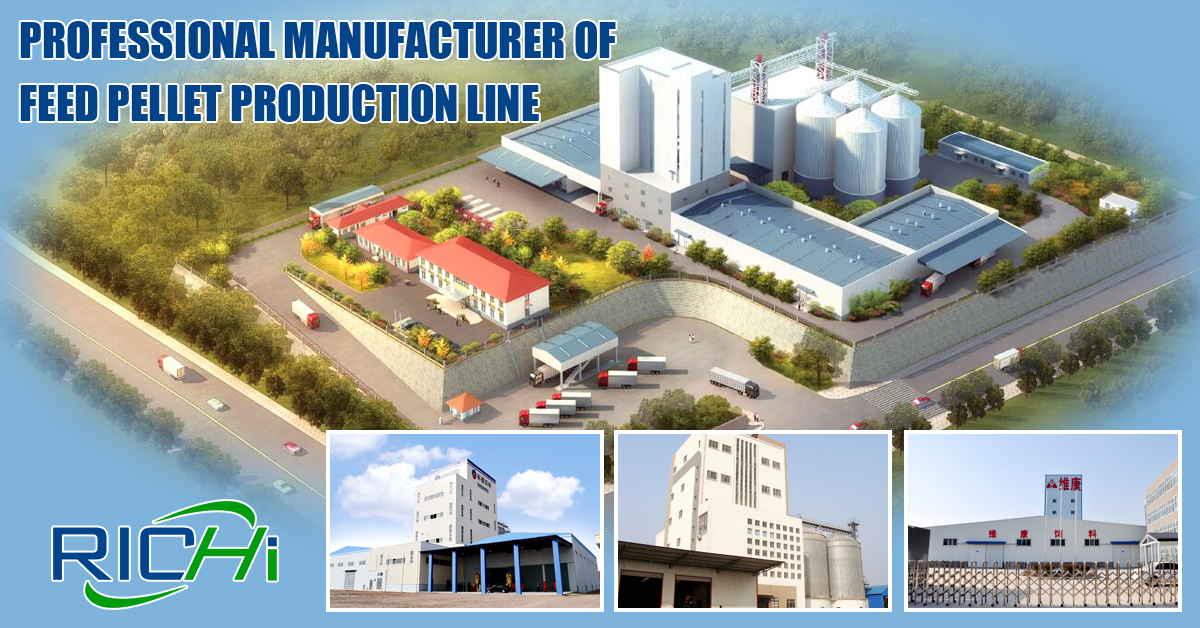
The equipment is only part of the equation. The supplier behind it matters just as much. A supplier with experience in poultry feed production can help you design a line that meets your specific needs. They can recommend the right capacity, the right die configuration, and the right level of automation. They can also provide installation, training, and ongoing support.
Ask for references. Talk to other producers who have bought similar equipment. Ask about the quality of the equipment, the reliability of the supplier, and the level of support they received. A supplier who is recommended by other producers is a safer choice than one who is not.
Visit an installation if you can. See the equipment in operation. Talk to the operators. Watch how the line runs. Ask about maintenance and downtime. A firsthand look will tell you more than any brochure.
Taking the Next Step
Feed is the largest cost in poultry production. It is also the factor that most directly affects flock performance. When you control the feed, you control the outcome. The right equipment makes that control possible.
Whether you are producing feed for your own flock or for sale to other farms, the quality of your pellets determines your success. The technology is proven. The equipment is available. The question is whether you are ready to take the next step. If you are tired of watching your feed bill climb while your birds sort through their rations, it may be time to consider a different approach. The answer might be simpler than you think.