

As global aquaculture continues to expand, the demand for stable, high-performance feed production systems has become more urgent than ever. Fish farming is no longer a small-scale activity; it has evolved into a highly industrialized sector that relies heavily on precision engineering and automated production lines.
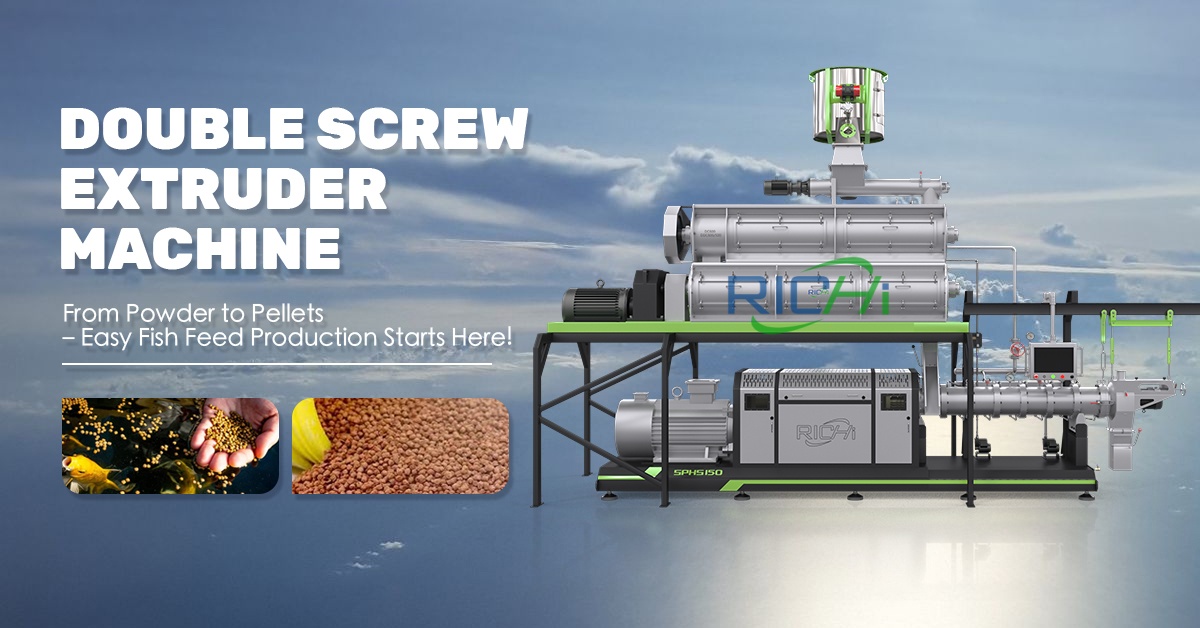
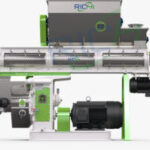
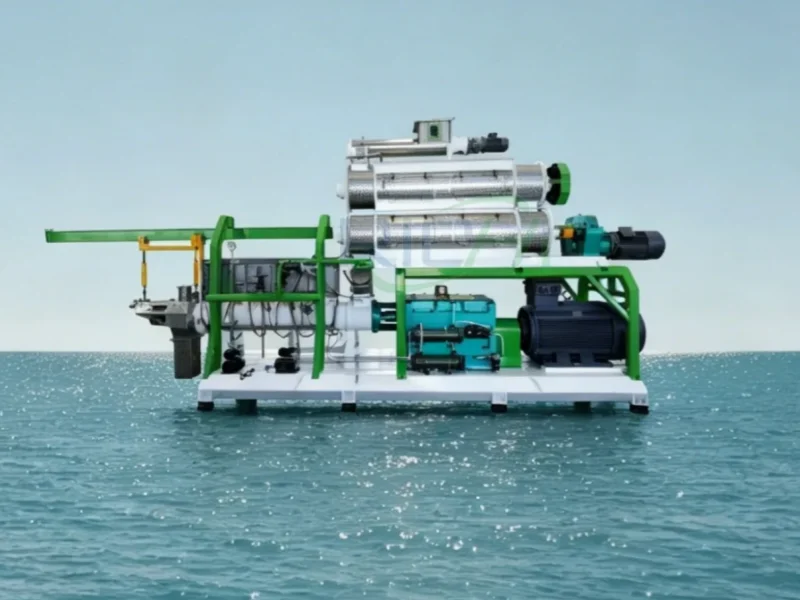
At the center of this transformation is the floating fish feed extruder machine, a key piece of equipment that determines feed quality, water stability, and production efficiency.
This article explores how modern extrusion systems are reshaping aquafeed factories, improving profitability, and enabling scalable industrial fish farming.
(Related Post: https://www.richipelletmill.com/floating-fish-feed-extruder-machine/ )
1. Industrialization of Aquafeed Production
In traditional fish farming, feed was often produced using simple mechanical pelletizers with limited control over density and structure. However, as aquaculture scaled up, these systems became insufficient for maintaining consistent feed quality.
Modern feed factories now rely on integrated extrusion systems that combine:
- Grinding and milling
- Mixing and batching
- Conditioning and cooking
- High-pressure extrusion
- Drying and cooling
The floating fish feed extruder machine plays a central role in this process, ensuring that each pellet meets strict quality and nutritional standards.
2. How Floating Feed Extrusion Improves Production Stability
One of the biggest advantages of extrusion technology is its ability to stabilize feed characteristics across large production batches.
Inside the extruder, raw materials are subjected to:
- Heat treatment
- Pressure variation
- Mechanical shear
- Steam conditioning
This process ensures uniform gelatinization, which directly affects pellet expansion and floating ability.
As a result, fish farmers benefit from:
- Predictable feeding behavior
- Reduced feed waste
- Improved water quality
- Better growth performance
3. Multi-Capacity Production Systems in Modern Factories
Different aquaculture businesses require different production capacities depending on scale and target market.
For example, mid-to-large factories may integrate systems like 2-3 T/H sinking fish feed extrusion machine for sale to support diversified product lines, including both floating and sinking feed types.
This flexibility allows manufacturers to:
- Serve multiple fish species
- Expand market reach
- Improve equipment utilization
- Reduce production downtime
Modern plants are increasingly designed as modular systems, allowing capacity upgrades without replacing entire production lines.
4. Role of Equipment Manufacturers in System Efficiency
The performance of a fish feed production line depends heavily on equipment quality and engineering design.
Companies such as Richi Machinery Manufacture specialize in designing complete aquafeed production systems tailored to industrial requirements. Their engineering approach focuses on:
- Energy efficiency
- Automation integration
- Stable pellet quality
- Long-term operational reliability
Similarly, solutions provided by Richi Pellet Mill are widely used in international aquaculture projects where production consistency is critical.
Choosing the right manufacturer ensures not only equipment performance but also long-term cost efficiency.
5. Advantages of Floating Fish Feed Extrusion Technology
Modern extrusion systems provide several key advantages over traditional pellet production methods:
5.1 Higher Feed Efficiency
Extrusion improves digestibility, allowing fish to absorb nutrients more effectively.
5.2 Reduced Feed Waste
Floating pellets remain visible on water surfaces, helping farmers control feeding amounts.
5.3 Improved Product Uniformity
Each pellet maintains consistent size, density, and structure.
5.4 Flexible Formulation
Different raw materials can be processed depending on species requirements.
6. Floating vs Sinking Feed Production Strategy
In industrial aquaculture, both floating and sinking feeds are essential depending on feeding behavior.
Floating feed is widely used for:
- Tilapia
- Carp
- Ornamental fish
Sinking feed is preferred for:
- Shrimp farming
- Catfish production
- Bottom-dwelling species
Advanced extrusion systems can switch between both modes depending on configuration, making production lines more flexible and profitable.
7. Global Applications of Fish Feed Extrusion Systems
Extruded feed systems are now widely used across global aquaculture markets, including Asia, Europe, and South America.
Common applications include:
- Commercial fish farms
- Intensive aquaculture systems
- Hatchery feed production
- Shrimp farming operations
- Industrial feed processing plants
The versatility of extrusion technology makes it suitable for both small-scale and large-scale operations.
8. Production Optimization Techniques
To maximize efficiency in extrusion-based feed production, manufacturers should focus on:
Raw Material Control
Proper grinding size ensures uniform extrusion performance.
Moisture and Steam Adjustment
Correct conditioning improves pellet expansion and reduces energy consumption.
Screw Design Optimization
Different screw configurations affect pressure, mixing, and output stability.
Preventive Maintenance
Regular inspection reduces downtime and extends machine lifespan.
9. Industry Trends in Aquafeed Manufacturing
The aquafeed industry is evolving toward:
- Fully automated smart factories
- Energy-saving extrusion systems
- Precision nutrition technology
- Sustainable production models
- Multi-functional production lines
These trends are reshaping global competition and encouraging continuous innovation in feed machinery design.
10. Additional Industry Insight
For deeper technical understanding and equipment comparison, manufacturers often explore resources such as site here, which provide detailed insights into extrusion systems and production line configurations.
Conclusion
The floating fish feed extruder machine is a core component of modern aquaculture production systems. As the industry continues to industrialize, extrusion technology will remain essential for improving feed quality, production efficiency, and sustainability.
Investing in advanced equipment and well-designed production lines is now a key factor for success in the global aquafeed market.