


Cassava can be used as an energy-rich ingredient in livestock feed when it is properly processed and included in a balanced formula. Depending on the available material, farms may process cassava roots, dried chips, cassava meal, or suitable processing residues.
The production process is relatively straightforward, but the raw material must be prepared correctly before pelletizing. Particle size, moisture, formula composition, and pellet diameter all influence the finished feed.
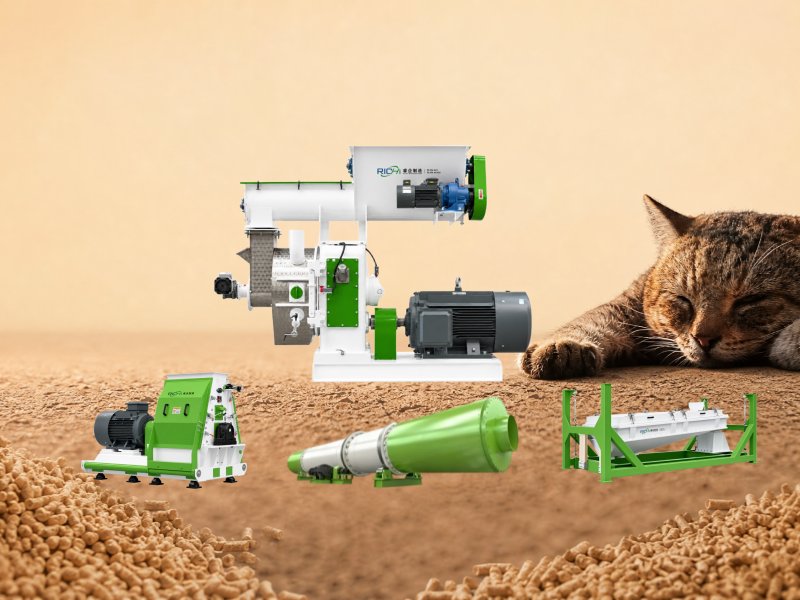
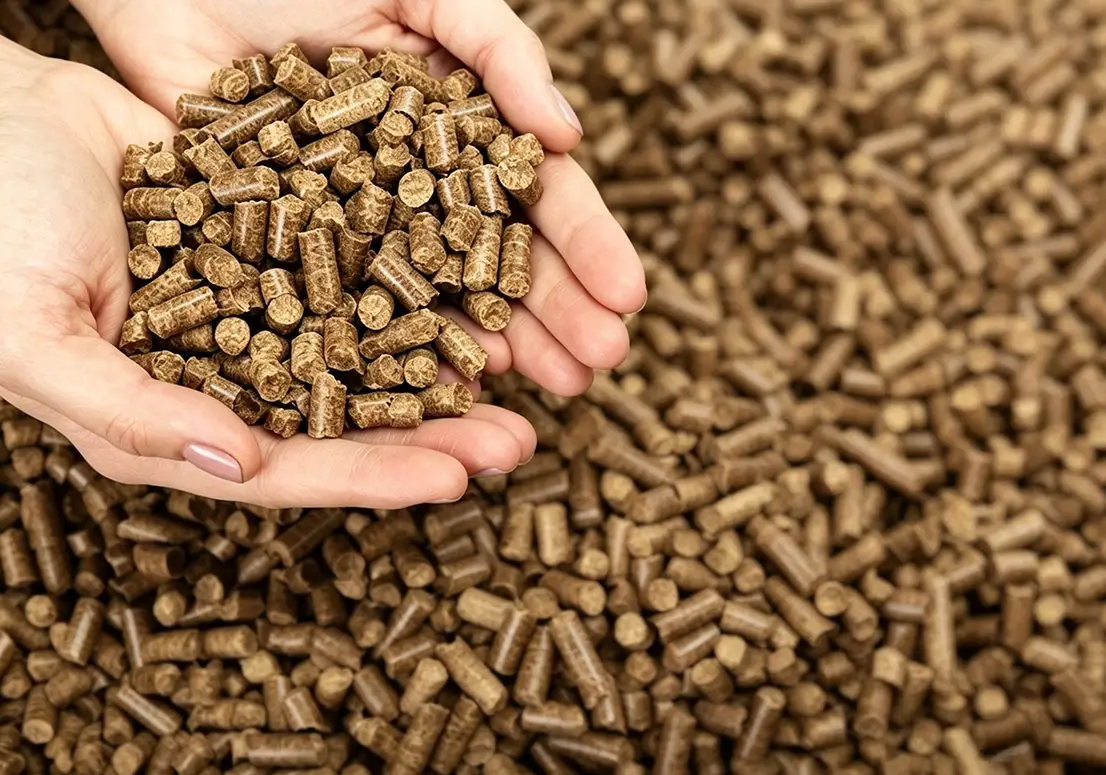
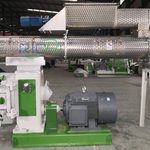
A cassava pellet machine for animal feed can form the prepared mixture into compact pellets, making the feed easier to handle, transport, and store.
What Forms of Cassava Can Be Used?
Cassava may arrive at the farm in several forms.
Fresh cassava roots contain considerable moisture and normally require drying before conventional pelletizing. Dried cassava chips have a lower moisture content and can be ground into smaller particles before mixing.
Cassava meal can simplify the preparation process because it is already relatively fine. However, the material should still be checked for moisture and contamination before entering the feed-production system.
The appropriate process therefore depends on the form and quality of the cassava available locally.
Why Is Grinding Necessary?
Large cassava pieces are difficult to mix uniformly with other feed ingredients. Grinding reduces the material to a more suitable particle size.
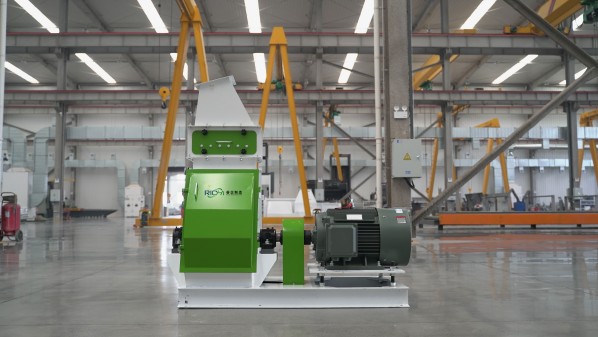
A hammer mill can process dried cassava chips into smaller particles. The required size depends on the feed formula and target pellet diameter.
Uniform particle size also helps the mixer distribute cassava more evenly with protein ingredients, bran, minerals, vitamins, and other components.
How Should Cassava Be Included in the Formula?
Cassava is mainly used as an energy source rather than as the only ingredient in a complete livestock ration.
A typical formula may combine cassava with protein-rich materials such as soybean meal or other suitable protein sources, together with bran, minerals, vitamins, and other nutritional ingredients.
The exact inclusion level depends on the animal species, age, production stage, and nutritional requirements.
For commercial feed production, the formula should be developed according to the nutritional needs of the target livestock rather than simply maximizing the amount of cassava used.
Does Moisture Affect Pellet Quality?
Yes.
If the cassava is too wet, the mixture may become difficult to handle and pelletize consistently. Excess moisture can also increase the drying requirement after processing.
If the material is excessively dry, pellet formation may become less stable.
For this reason, moisture should be checked before pelletizing. When necessary, a dryer can be installed upstream to bring the raw material closer to the required processing condition.
How Does Pelletizing Work?
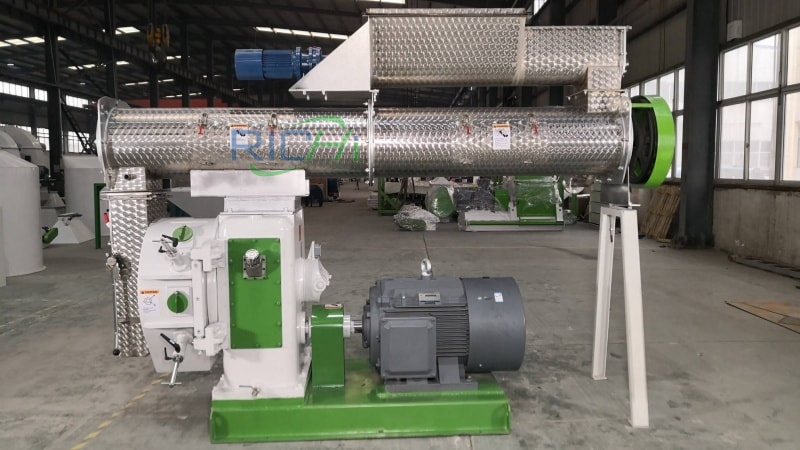
After grinding and mixing, the prepared feed enters the pellet mill.
The machine compresses the mixture through die holes, forming cylindrical pellets. Pressure and friction generate heat and help the particles bind together.
The die determines the approximate pellet diameter. Different livestock species may require different pellet sizes.
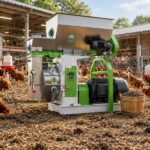
A sunflower shell pellet machine for small farms can be configured around the farm’s daily feed demand, raw-material availability, and desired pellet size.
A compact system may be suitable when the farm produces feed mainly for its own animals.
Why Is Cooling Required?
Fresh pellets leave the machine at a higher temperature than the surrounding environment. They also retain moisture from the conditioning and pelletizing process.
A cooler reduces the temperature of the finished pellets and helps improve their physical stability.
After cooling, screening removes excessive fines and undersized pellets. Suitable fines can sometimes be returned to the production process.
The cooled product can then be transferred to bags, bulk storage, or another packaging system.
Which Animals Can Use Cassava-Based Pellets?
Cassava can be incorporated into feed formulas for different livestock species, including cattle, sheep, goats, and pigs, provided that the complete ration meets the nutritional requirements of the target animal.
Pellet size and formula should be adjusted accordingly.
For example, feed for young animals may require smaller pellets, while mature livestock can generally consume larger particles.
The production equipment itself can remain similar while the formula, die, and operating parameters change.
What Equipment Does a Small Farm Need?
A compact cassava-feed system may contain:
- Cassava crusher or hammer mill
- Feed mixer
- Pellet mill
- Cooler
- Screener
- Conveyor
- Packing equipment
A dryer can be added when the incoming cassava contains excessive moisture.
For farms with limited production, some material handling and packing operations can remain manual. As output grows, conveyors and automatic packing can be added.
Why Test the Raw Material First?
Cassava varies between farms and processing sources. Moisture, particle size, starch content, and material condition can all affect pellet production.
Testing a representative sample allows the equipment supplier to evaluate grinding requirements, moisture adjustment, pellet formation, and finished-product quality.
It can also help determine the appropriate die diameter and production configuration.
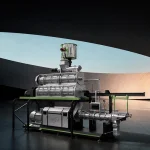
A complete feed pellet machine system should therefore be selected according to the entire feed-production process rather than the pellet mill alone.
The basic workflow is:
Cassava → Grinding → Mixing → Conditioning → Pelletizing → Cooling → Screening → Packing
With appropriate raw-material preparation and a balanced feed formula, cassava can become a practical component of locally produced livestock feed. Read more about feed pelletizing equipment and small-scale animal feed production.
Related Post: https://pelletizerequipment.com/paper-pellet-machine/