



When people begin researching manure fertilizer production, the first question is often about machinery capacity.
“How many tons per hour can the machine produce?”
That is useful, but it is not the best starting question.
The more important issue is whether the planned production capacity matches raw-material availability, market demand, labor resources, drying requirements, working hours, and storage space.
A fertilizer project producing 1 ton per hour for 8 hours a day has a very different business model from a plant operating continuously at several tons per hour. The equipment configuration, investment structure, logistics, and finished-product inventory can all change.
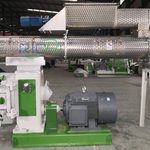
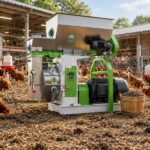
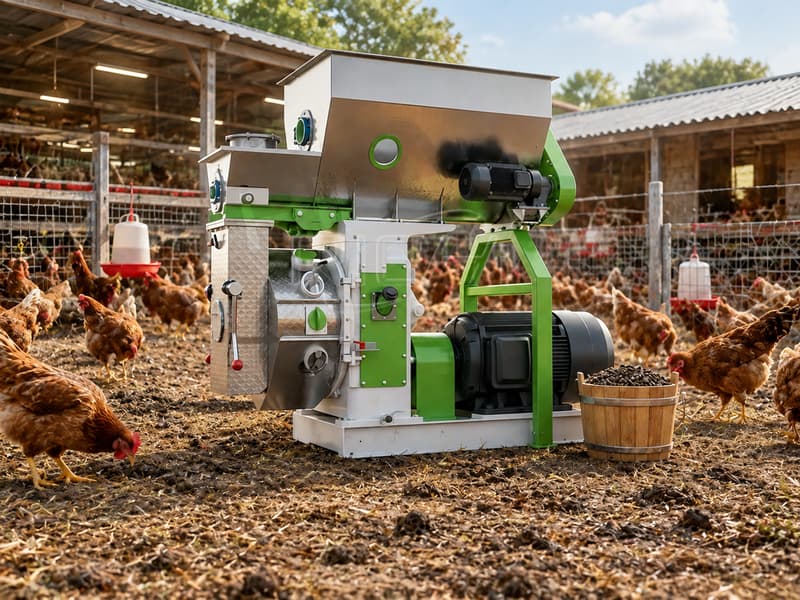
For anyone considering a chicken manure pelletizer, project sizing should therefore begin with the entire production chain instead of the pelletizing unit alone.
Start with Raw Material Availability
Raw material is the foundation of production.
A poultry farm may generate manure every day, while a fertilizer trader may need to purchase material from several external suppliers. The first situation offers relatively predictable supply. The second may involve seasonal fluctuations, transportation costs, moisture differences, and quality variations.
Before deciding capacity, operators should estimate how much usable manure is actually available.
This distinction matters because total manure generated is not always equal to processable manure. Some material may be too contaminated, too wet, unavailable during certain periods, or required for other farm-management practices.
Realistic supply should therefore be calculated rather than assumed.
Daily Production Is More Useful Than Hourly Capacity
Hourly capacity is easy to advertise, but daily production is often more meaningful for project planning.
Consider a simple example.
A plant designed around a nominal capacity of a few tons per hour may operate only one shift per day. Another plant with lower peak capacity may run longer and achieve a similar daily output.
Therefore, investors should think about the relationship between:
Production per hour × operating hours × working days = practical output.
This approach helps connect machinery specifications with actual sales requirements.
It also prevents a common mistake: selecting equipment based on theoretical capacity without considering how many hours the business really intends to operate.
Why Market Demand Should Influence Machine Size
Equipment can make products faster than the market can absorb them.
That creates another problem: inventory.
Organic fertilizer does not generate value merely because it has been produced. It becomes valuable when customers purchase and use it.
A new fertilizer business may therefore benefit from starting with a capacity that allows it to validate local demand before scaling.
The target market could include commercial farms, greenhouse operators, fruit growers, crop cooperatives, nurseries, landscaping companies, or agricultural distributors.
Different markets may purchase different volumes.
(Related Post:https://www.richipelletmill.com/organic-fertilizer-pellet-machine/)
A regional fertilizer supplier might need a continuous industrial plant. A poultry producer serving nearby farmers may only need a compact line.
There is no universal “correct” capacity.
How a 1- to 4-Ton-Per-Hour Concept Can Be Evaluated
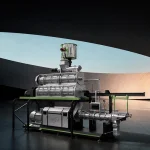
A 1-4 T/H Organic Fertilizer Production Line solution can cover a useful range for businesses that are moving beyond small experimental production but do not yet require a very large factory.
At this scale, the plant can be configured with different levels of automation.
Some projects may emphasize straightforward operation and low labor requirements.
Others may prioritize higher automation, automated weighing, bagging, centralized control, and larger storage systems.
The capacity number alone does not determine project complexity.
Material moisture can have a bigger influence.
A high-moisture raw material may require a substantial drying section, while a relatively dry feedstock may allow a simpler configuration.
Why the Dryer Can Determine the Real Capacity
Imagine a pelletizer capable of processing several tons per hour.
If the dryer cannot prepare material at the same rate, the pelletizer cannot maintain continuous production.
This creates a bottleneck.
In organic fertilizer projects, drying can therefore become the controlling section of the plant.
The solution is not always a larger dryer. First, the actual incoming moisture must be known.
A difference in raw-material moisture can represent a significant difference in water removal per hour. That means two projects with the same pellet output may require very different thermal systems.
This is why equipment suppliers normally need raw-material information before recommending a complete line.
What About Cow Manure?
Cow manure can be processed using a similar general concept, but preparation requirements vary according to its moisture and fibrous structure.
For a business specifically evaluating a 2-3 T/H cow dung pellet making machine for sale, it is useful to determine whether the manure will be processed alone or blended with other organic materials.
Blending may be used to improve formulation, moisture balance, nutrient characteristics, or process stability.
The important point is that capacity should be calculated for the actual formulation, not for an abstract raw material.
Raw Material Blending Can Change Everything
Suppose a fertilizer manufacturer plans to combine poultry manure with crop residues.
That changes the physical properties of the feedstock.
The mixture may need different grinding, mixing, drying, and pelletizing settings from the original manure.
This is one reason production trials are so valuable.
A laboratory analysis can tell you a lot about chemical characteristics, but equipment trials can reveal how the material behaves mechanically.
Does it feed smoothly?
Does it form stable pellets?
How much fines are produced?
Does the mixture require additional moisture?
How long does drying take?
These questions can be more valuable than simply knowing the percentage of one nutrient.
Is an Industrial Plant Always the Goal?
No.
A business may begin with a local production strategy.
For example, an agricultural cooperative could process manure generated within a defined regional radius and sell the finished fertilizer to nearby growers.
This reduces dependence on long-distance logistics.
Another model is a centralized plant that purchases manure from multiple farms and distributes finished fertilizer across several provinces or regions.
In this model, raw-material transportation and storage become more important.
As production scale increases, logistics can influence profitability just as much as machinery.
Storage Capacity Should Match Production
Storage is often underestimated during the design stage.
If the fertilizer factory produces continuously but customers purchase seasonally, finished pellets may accumulate.
The plant therefore needs enough protected storage for finished goods.
Raw-material storage must also be considered.
Manure supply does not always arrive at exactly the same rate as production. Buffer storage provides flexibility, but it also requires floor area, ventilation, handling equipment, and management.
The layout should separate incoming raw materials, processed material, finished pellets, packaging materials, and rejected or recyclable fines.
A clean material flow reduces unnecessary movement.
What Does a Practical Production Flow Look Like?
A typical organic fertilizer process can be understood as a sequence:
Raw-material receiving comes first.
Then foreign-material removal and size reduction may be required.
The material is then dried or moisture-adjusted as necessary.
After that, mixing and conditioning help create a consistent feedstock.
Pelletizing forms the fertilizer.
Cooling stabilizes the product.
Screening removes excessive fines and oversize particles.
Finally, the pellets are packed and moved to storage or shipment.
The specific machinery can vary, but the logic remains similar.
This process perspective is more useful than focusing on one machine because it reveals where bottlenecks can occur.
How Much Automation Is Appropriate?
Automation should match the project’s operating model.
For a small plant with a small workforce, basic automated controls can simplify starting and stopping equipment and reduce manual coordination.
For larger commercial factories, centralized control systems become more valuable because many machines must operate in sequence.
Automation can also help monitor temperature, conveyor status, feeding rates, and alarms.
However, more automation does not automatically mean better economics.
If a compact plant can operate efficiently with a simpler control architecture, excessive automation may increase initial cost without creating proportional value.
The right question is not “How automated can the plant be?”
It is “Which operations are worth automating?”
Where Equipment Cost Fits into Capacity Decisions
Capacity planning should not begin with the equipment quote.
Start with the production target.
Then identify the raw materials.
Then calculate moisture removal.
Then determine the required process flow.
Only after these steps should machinery specifications be compared.
This helps avoid a common purchasing mistake: comparing two pelletizers solely because both have similar nominal tonnage.
One may require a different feeder, dryer, cooler, or mixer configuration.
Another may be optimized for another raw-material structure.
The lowest equipment price is not necessarily the lowest total project cost.
What Makes a Project Expandable?
A smart small plant should leave room for expansion.
That might mean allocating floor space for an additional dryer, reserve conveyor route, larger packing system, or second pelletizing line.
Electrical systems and foundations can also be planned with future growth in mind.
This approach lets the company expand when sales justify it rather than rebuilding the factory from scratch.
For growing fertilizer businesses, modular expansion is often easier to manage than replacing an entire production system.
Choosing a Supplier for the Whole Process
When the project involves several processing stages, supplier capability becomes important.
A supplier should be able to explain how the machines work together, where the critical control points are, and which assumptions were used when calculating output.
For businesses comparing equipment providers, Richi Pellet Mill is one possible technical reference when researching pelletizing systems, complete lines, and related organic-material processing solutions.
The key is not the supplier name alone. What matters is whether the proposed configuration fits the customer’s actual raw material, target product, working schedule, and market.
The Most Important Number May Not Be Tons Per Hour
Capacity is only one variable in project planning.
A more useful project model may include:
raw material available per day, actual operating hours, target monthly sales, average moisture, expected finished-product yield, storage requirements, labor, energy, and logistics.
These numbers reveal whether the project is practical.
That is a much stronger foundation for investment decisions than simply choosing the largest machine a budget can afford.
Readers looking deeper into organic fertilizer machinery can discover this info here and compare different production concepts before discussing a detailed plant configuration.
Designing for the Business, Not the Brochure
A successful fertilizer plant is not defined by the biggest capacity number on a specification sheet.
It is defined by whether the factory can reliably turn available raw materials into a product that customers actually want to buy.
That means production capacity, process stability, pellet quality, storage, packaging, labor, energy, and market demand must work together.
Once these factors are aligned, equipment selection becomes much easier.
The best starting point is not “Which machine should I buy?”
It is “What product do I want to sell, how much can I realistically produce, and what process will allow me to do it consistently?”
That is the foundation of a practical manure fertilizer business.


