




RICHI wood dryer machine prices range from approximately USD 5,000 to USD 218,000 across the published drum and belt dryer range. Rotary drum dryers are listed at USD 15,000–110,000 with capacities of 1–40 t/h, while mesh belt dryers are listed at USD 60,000–218,000 with drying areas of 13–124 m². The correct choice depends on material form, incoming moisture, required discharge moisture, heat source, evaporation duty and whether the dryer will operate alone or as part of a pellet production line.
1. Rotary Drum Dryer or Mesh Belt Dryer: Which One Fits the Material?
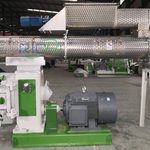
RICHI offers two main wood drying configurations. A rotary drum dryer tumbles and moves material through a heated drum, making it suitable for high-throughput preliminary drying of sawdust, wood chips, straw, grass and other bulk materials. A mesh belt dryer carries material on a moving belt through controlled drying zones and is particularly useful for fragile or lightweight materials such as wood shavings used for animal bedding.
| Comparison | Rotary Drum Dryer | Mesh Belt Dryer |
|---|---|---|
| Published price range | USD 15,000–110,000 | USD 60,000–218,000 |
| Published capacity / area | 1–40 t/h | 13–124 m² drying area |
| Typical materials | Sawdust, wood chips, straw, grass, manure | Wood shavings, fragile biomass, feed and other formed products |
| Drying method | Rotating drum with hot-air heat exchange | Material conveyed on a mesh belt through drying zones |
| Heat source | Hot-air furnace / biomass burner or configured heat source | Electric or steam heating options listed |
| Main selection priority | Bulk throughput and evaporation duty | Gentle handling and controlled residence time |
Choose the drum dryer when the feed is a bulk material that can tolerate tumbling and the project needs substantial throughput. Consider a belt dryer when the material is fragile, lightweight or needs gentler handling. A lower purchase price does not make one type universally better: the dryer must suit the material’s physical behavior and the next process stage.
2. Rotary Drum Dryer Specifications and Configuration
Our rotary dryer range includes drum diameters from 0.6 to 1.8 m and lengths from 6 to 36 m, with single-layer and three-layer configurations. The listed drum rotation speed is 3–12 rpm. For the listed configurations, the reference inlet air temperature is 400–500°C and outlet air temperature is 70–80°C. These are equipment-side reference temperatures; actual material temperature and operating setpoints depend on the feedstock, heat exchange, residence time and process safety requirements.
| Model Reference | Diameter | Length | Layers | Rotation Speed |
|---|---|---|---|---|
| φ0.6×6 | 0.6 m | 6 m | 1 | 3–12 rpm |
| φ0.8×8 | 0.8 m | 8 m | 1 | 3–12 rpm |
| φ1.2×12 | 1.2 m | 12 m | 1 | 3–12 rpm |
| φ1.5×15 | 1.5 m | 15 m | 1 | 3–12 rpm |
| φ1.8×18 / φ1.8×20 | 1.8 m | 18–20 m | 1 | 3–12 rpm |
| φ1.8×36 | 1.8 m | 36 m | 1 | 3–12 rpm |
| φ1.8×12×3C / φ1.8×24×3C | 1.8 m | 12–24 m | 3 | 3–12 rpm |
A three-layer drum can reduce the floor space required for a given drying route, but it should be selected only after checking material flow, residence time, cleaning access and the actual evaporation requirement. Drum dimensions alone do not determine capacity; moisture reduction and feed characteristics matter just as much.
3. Mesh Belt Dryer Specifications for Fragile Materials
The belt dryer range includes two-, four- and five-layer configurations, with listed belt widths from 0.8 to 2.2 m and drying areas from 13 to 124 m². Our belt dryer configurations use PET woven mesh belts and can incorporate hot-air recirculation; the stated configuration indicates energy savings of over 30%. Actual savings depend on inlet conditions, airflow, heat source, exhaust control and operating practice; they should be verified against the project’s baseline.
| Model Group | Power Reference | Layers | Belt Width | Drying Area |
|---|---|---|---|---|
| WDHG150-4/2 | 44.3 kW | 2 | 1.5 m | 30 m² |
| WDHG200-4/2 | 49.8 kW | 2 | 2.0 m | 40 m² |
| WDHG200/4-4 | 61.65 kW | 4 | 2.0 m | 80 m² |
| WDHG220/6-4 | 71.8 kW | 4 | 2.2 m | 124 m² |
| DHG / QHG models | Model-specific | 5 | 0.8–1.6 m | 13–58 m² |
4. Calculate Water Evaporation Before Selecting Dryer Capacity
A dryer should be sized by the water it must remove, not by wet-feed tonnes per hour alone. Initial moisture, target moisture and wet-feed rate determine the basic evaporation duty. For example, 1,000 kg/h of wood material at 40% moisture on a wet basis contains 600 kg/h of dry solids. If the target moisture is 15%, the finished stream is about 706 kg/h, so approximately 294 kg/h of water must be removed.
| Mass Balance Item | Illustrative Value |
|---|---|
| Wet feed rate | 1,000 kg/h |
| Initial moisture | 40% wet basis |
| Dry solids | 600 kg/h |
| Target moisture | 15% wet basis |
| Finished material flow | Approximately 706 kg/h |
| Water evaporation | Approximately 294 kg/h |
If the same wet-feed rate arrives at 50% moisture and must still be dried to 15%, the dryer must remove approximately 412 kg/h of water. That is about 40% more evaporation duty than the 40% moisture case. This is why a plant designed only around average moisture may become the bottleneck during wet periods. Always collect typical and peak moisture data before fixing the dryer size.
5. Heat Source, Fuel Use and Operating Cost
Rotary drum drying systems in the product examples are used with biomass burners and hot-air furnaces. A factory with its own wood waste or biomass fuel may be able to use that stream as a heat source, while another site may need to compare gas, steam or electric options. The lowest-cost fuel is not automatically the lowest-cost drying solution: fuel preparation, ash removal, labor, emissions control, temperature regulation and maintenance also affect operating cost.
For a simple planning example, assume a dryer removes 300 kg of water per hour and operates 10 hours per day for 25 days per month. Monthly water removal is 75,000 kg. If the combined thermal and electrical cost allocated to drying is USD 0.025 per kg of evaporated water, monthly drying energy cost is USD 1,875. At USD 0.04 per kg, it becomes USD 3,000. This is an illustrative sensitivity calculation, not a RICHI energy guarantee. The actual figure requires the selected heat source, inlet conditions, exhaust temperature, heat recovery and local energy tariff.
6. Wood Dryer Integration with a Pellet Production Line
When dried material feeds a wood pellet mill, dryer discharge moisture and temperature must match the pelletizing process. RICHI’s biomass planning reference uses approximately 20% maximum moisture before pelleting, while incoming biomass at 30%–50% moisture will generally require drying. The exact target depends on wood species, particle size, pellet mill and finished pellet specification.
Do not size the dryer independently from the pellet mill. If the pellet mill consumes 4 t/h of prepared material but the dryer supplies only 3 t/h at the required moisture, the pellet mill will be starved. Conversely, a dryer with much more capacity than the rest of the line may operate inefficiently at low load unless it has a suitable turndown range or buffer storage. Selected auxiliary capacity margin may be useful, but it should be based on measured feed variation and the planned operating schedule.
7. Project Examples: Why the Dryer Type Changes with the Material
RICHI’s published project examples show both dryer types in practical use. In South Africa, a 3–4 t/h sawdust dryer project is priced at USD 35,000 and uses a drum dryer with a biomass burner and hot-air furnace. In Poland, a 2–3 t/h belt dryer for wood shavings used in animal bedding is listed at USD 60,000; the customer’s priority was gentle handling of lightweight, fragile shavings.
Other examples include a 10 t/h US wood pellet project using two three-layer drum dryers to save floor space, a 5–6 t/h Canadian panel-mill project using a drum dryer and hammer mill, and a Romanian 3 t/h wood pellet project that connected the dryer to an existing boiler. In the latter case, the dryer price excluded auxiliary heating equipment. These examples show why quotations must state whether the hot-air furnace, burner, dust collection and installation are included.
8. What Determines the Final Wood Dryer Price?
Capacity, evaporation duty, dryer type, number of layers, heating configuration, automation, and auxiliary equipment all influence the quotation. A rotary drum dryer may require a burner and hot-air furnace; a belt dryer may require a larger drying area, mesh belt, recirculation fans and heating controls. Civil works, platforms, ducts, electrical installation, dust collection, commissioning and freight may be separate items.
- Material type, sample, particle size and bulk density.
- Wet-feed rate and initial moisture range.
- Required discharge moisture and evaporation rate.
- Heat source, fuel availability and thermal input.
- Fans, recirculation, cyclone, filters and dust collection.
- Building dimensions, foundations and maintenance access.
- Controls, installation, commissioning, training and exclusions.
For a project quotation, provide the wet-feed rate, initial and target moisture, material type, particle size, daily operating hours, available heat source and downstream process. Review the RICHI wood dryer machine prices, models and configuration options against the same evaporation duty and supply boundary.
Conclusion
The right wood dryer is selected by material behavior and water-removal duty, not by wet-feed capacity alone. Rotary drum dryers suit many bulk biomass applications, while mesh belt dryers are useful when fragile material needs gentler handling. A reliable quotation should state moisture assumptions, heat source, evaporation rate, auxiliary scope and how the dryer integrates with the next process. That is the basis for comparing investment and operating cost fairly.
Frequently Asked Questions
How much does a RICHI wood dryer machine cost?
Our overall reference price range is approximately USD 5,000–218,000. Rotary drum dryers are listed at USD 15,000–110,000, while mesh belt dryers are listed at USD 60,000–218,000. Final price depends on capacity, evaporation duty, heat source and auxiliary scope.
What is the difference between a drum dryer and a belt dryer?
A drum dryer tumbles bulk material through a heated rotating cylinder and is suited to many sawdust and wood-chip applications. A belt dryer carries material on a mesh belt through controlled drying zones and is useful for fragile or lightweight materials such as wood shavings.
How is dryer capacity calculated?
Provide wet-feed rate, initial moisture and target moisture on the same basis. Calculate dry solids and the finished material flow; the difference between wet feed and dried output is the water to be evaporated. Thermal sizing then considers heat losses and dryer efficiency.
Can a wood dryer use biomass as its heat source?
Yes. RICHI’s project examples include drum dryers supplied with biomass burners and hot-air furnaces. The complete system should account for fuel preparation, ash handling, temperature control, emissions and maintenance.
What moisture should wood have before pelletizing?
RICHI’s biomass planning reference uses approximately 20% maximum moisture before pelleting. The actual target depends on wood species, particle size, pellet mill and finished pellet requirements. Material arriving at 30%–50% moisture will generally require drying.